Back to Models

Anthropic: Claude Sonnet 4.5Active

anthropic/claude-sonnet-4.5
CompareChat

Claude Sonnet 4.5 is Anthropic’s most advanced Sonnet model to date, optimized for real-world agents and coding workflows. It delivers state-of-the-art performance on coding benchmarks such as SWE-bench Verified, with improvements across system design, code security, and specification adherence. The model is designed for extended autonomous operation, maintaining task continuity across sessions and providing fact-based progress tracking.

Sonnet 4.5 also introduces stronger agentic capabilities, including improved tool orchestration, speculative parallel execution, and more efficient context and memory management. With enhanced context tracking and awareness of token usage across tool calls, it is particularly well-suited for multi-context and long-running workflows. Use cases span software engineering, cybersecurity, financial analysis, research agents, and other domains requiring sustained reasoning and tool use.

By:AnthropicInput Type:Output Type:Publish time:2025-09-29

Providers

Route requests across multiple providers. Copy a provider slug to set your preference.

ProviderCache Hit RateContext
Anthropic
anthropic
-$3-6/ M tokens$15-22.5/ M tokensRead:0.3-0.6/ M tokensWrite:3.75-12/ M tokens1M--
Google Vertex
google-vertex
-$3-6/ M tokens$15-22.5/ M tokensRead:0.3-0.6/ M tokensWrite:3.75-12/ M tokens200K0.68s15.8tps
Amazon Bedrock
amazon-bedrock
-$3-6/ M tokens$15-22.5/ M tokensRead:0.3-0.6/ M tokensWrite:3.75-12/ M tokens200K--

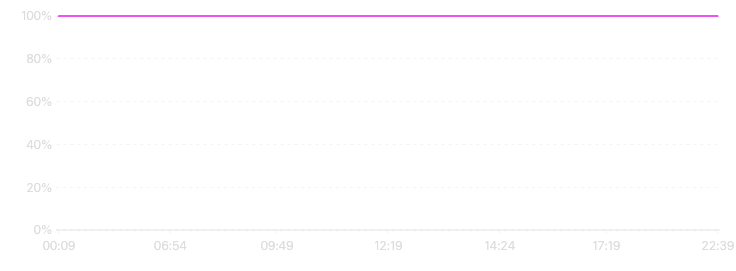
Uptime

Direct request success rate on AI Gateway and per-provider.

Oct 26, 11:19
Anthropic100.00%
Google Vertex100.00%

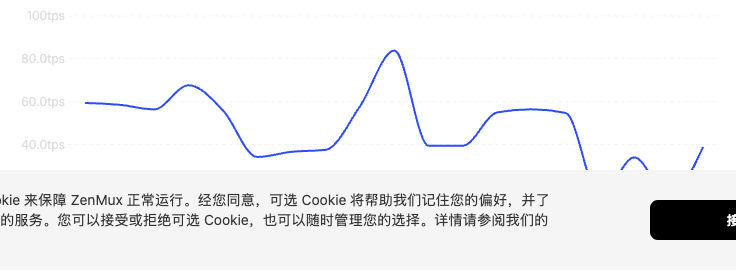
Throughput

P50 throughput on live AI Gateway traffic, in tokens per second (TPS).

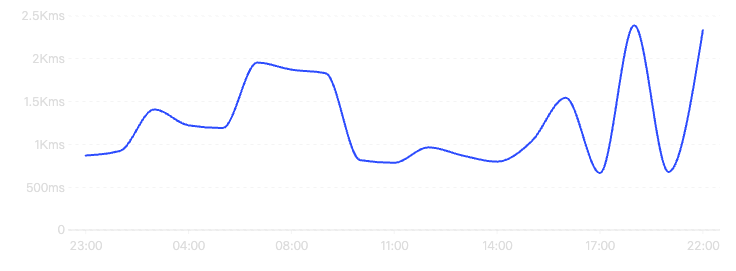
Latency

P50 time to first token (TTFT) on live AI Gateway traffic, in milliseconds.

Activity

Token volume and request traffic to this model over time.

Token Consumption
Oct 25
Anthropic-
Google Vertex1.2M
Amazon Bedrock-

Token volume broken down by the provider that served each request. Larger segments indicate providers handling more of this model's traffic.

Benchmarks

Scores on standardized evaluations. Higher percentages are better — and rank percentile shows

Metrics sourced fromArtificial Analysis

Apps

Public apps that send the most traffic to this model. Good signal for what real production workloads look like — and a hint at which use cases this model is best suited for. View All

Token Ranking
No data
No app usage is available for this period.

Related Models

More models from Anthropic

Anthropic: Claude Haiku 5.5
37.47Btokens

Claude Haiku 5.5 is Anthropic’s cheapest, fastest, and most capable small model to date, built for high-volume, cost-sensitive workloads. It handles summaries, compaction, database queries, classification, and subagent coding tasks with low latency, making it especially effective for live customer support, browser use, and other speed-sensitive applications.

Anthropic: Claude Sonnet 5.5
68.34Btokens

Claude Sonnet 5.5 is Anthropic’s upgraded Sonnet-class model, delivering stronger performance than Claude Sonnet 5 while running over 30% faster and at lower cost for many workloads. It is designed for agentic coding, tool use, and everyday professional tasks, making it well suited for developers and teams building fast, capable AI agents.

Anthropic: Claude Opus 5.5
235.48Btokens

Claude Opus 5.5 is Anthropic's flagship model for demanding reasoning, coding, and long-horizon agentic work, succeeding Claude Opus 5. It is particularly strong at multi-step changes in large codebases, code review and bug finding, financial and scientific analysis, and reading dense charts, diagrams, and screenshots, and it is more careful than its predecessor about only stating figures and citing sources it can back up. The model completes comparable tasks in fewer steps and with fewer tokens than Opus 5, and reports on its work in plainer language, with clear updates on what it did, what it found, and what it needs from the user. Thinking is always adaptive, so effort is the main lever for trading off depth, latency, and cost, and lower effort settings remain effective for latency-sensitive workloads.