

Understanding AI API Gateways
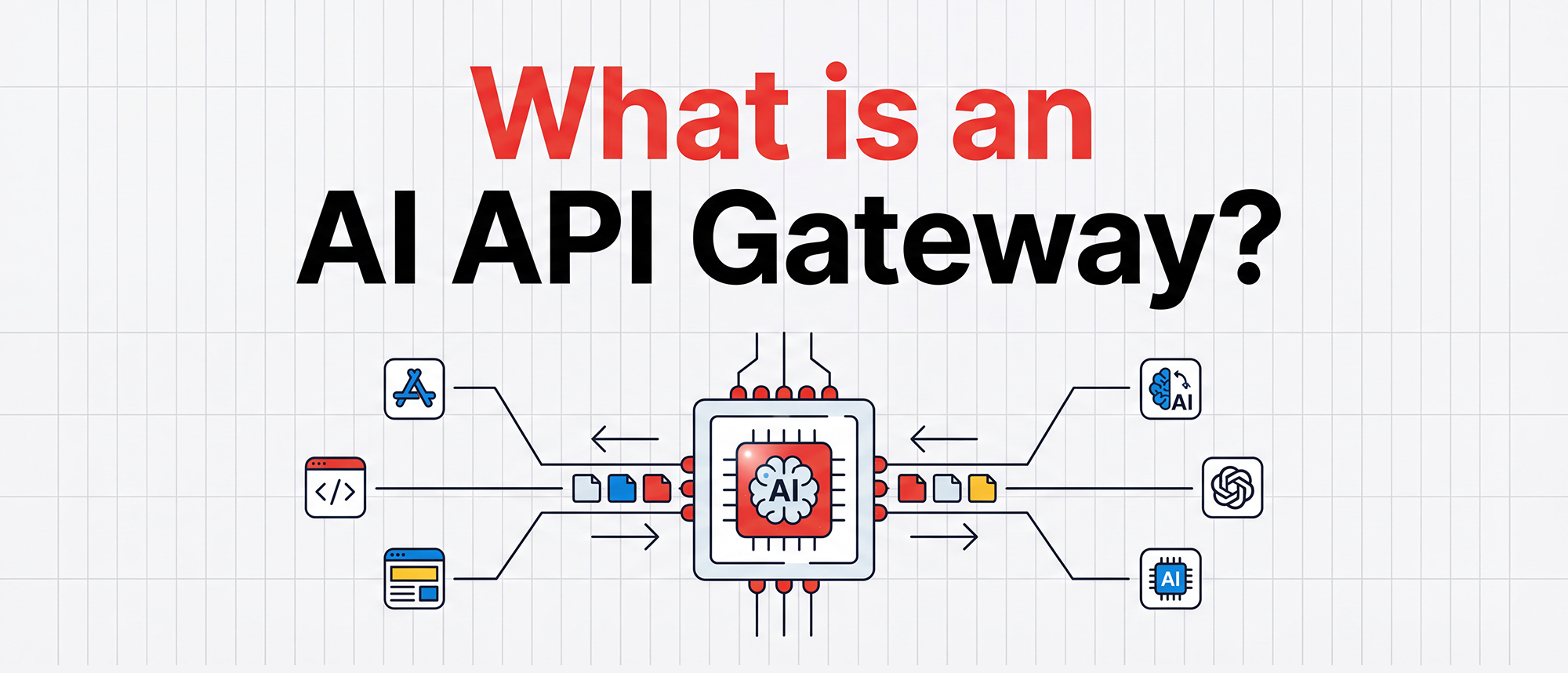
An AI API Gateway is a middleware platform that provides a unified entry point for managing, integrating, and orchestrating AI models and services in enterprise IT systems. Unlike traditional software, AI workloads often require specialized handling, such as multi-model orchestration, dynamic routing, and governance of sensitive data. The AI Gateway facilitates these processes, ensuring that AI models can be efficiently used by applications without adding complexity to development teams.
In short, an AI Gateway does not train AI models or guarantee their accuracy—its core purpose is to streamline how applications access and interact with AI services while maintaining security, scalability, and observability.
开桥 Tip: For businesses integrating multiple AI services, 开桥 provides a unified API gateway with intelligent model routing, real-time monitoring, and insurance-backed quality assurance. These tools complement AI Gateway deployments, enabling teams to maintain visibility, governance, and efficiency across all AI workloads while ensuring reliable, high-quality outputs.
Key Functions of an AI API Gateway
AI Gateways offer a variety of features tailored for AI workloads:
1. Standardized APIs
Simplifies integration across multiple AI services by providing a consistent API interface for applications. This reduces the need to adjust requests for each AI provider.
2. Model Orchestration and Deployment
Facilitates automated routing, versioning, and deployment of AI models. While AI Gateways help manage model lifecycle workflows, actual training and model updates remain the responsibility of MLOps pipelines or CI/CD systems.
3. Data Integration and Preprocessing
Connects to diverse data sources and formats, standardizing data for AI models. This ensures high-quality inputs for accurate inference without directly influencing model performance.
4. Load Balancing and Scalability
Distributes AI requests across multiple instances to maintain system performance and reliability during high-demand periods.
5. Security and Compliance
Enforces authentication, encryption, and access control. While these features support regulatory compliance, enterprise policies and external audits are still required for full adherence.
6. Monitoring and Logging
Tracks AI model usage, response times, and errors in real time. Provides insights for troubleshooting and optimization.
7. Inference Serving
Supports both real-time and batch inference, ensuring efficient processing of AI requests from multiple applications.
How AI Gateways Work
An AI Gateway operates as an intermediary between applications and AI models:
- Data routing: Receives input from apps, cleans, normalizes, and forwards it to the correct AI models.
- Request orchestration: Routes each request according to defined rules, balancing load across model instances.
- Security enforcement: Manages authentication, authorization, and data encryption to protect sensitive information.
- Monitoring: Logs key metrics such as token usage, error rates, and response times, helping teams optimize operations.
This setup allows development teams to focus on building AI-powered features without managing low-level model access or integration complexities.
AI Gateway vs. API Gateway
While both AI Gateways and API Gateways are middleware layers, their focus differs:
- API Gateway: Primarily manages client-to-backend API traffic, handling tasks like routing, authentication, rate limiting, and caching.
- AI Gateway: Focuses on orchestrating AI models and services, handling multi-model routing, secure data flows, and workload scaling.
An organization often uses both: the API Gateway for standard backend services, and the AI Gateway for AI-specific workloads.
Deployment Models for AI Gateways
AI Gateways can be deployed in several ways depending on infrastructure needs:
- Global cloud deployment: Leverages cloud data centers for low-latency AI request routing.
- Regional deployment: Ensures data residency compliance by processing AI workloads locally.
- Provisioned deployment: Guarantees high, consistent throughput for predictable AI workloads.
- Micro-gateway deployment: Deploys lightweight gateways alongside specific applications or services for localized control.
These models allow organizations to scale AI services efficiently while maintaining governance and security.
Benefits of Using an AI Gateway
AI Gateways provide multiple advantages:
- Centralized AI traffic management: Simplifies integration across multiple AI models.
- Improved scalability: Automates resource allocation and load balancing for consistent performance.
- Enhanced security: Implements access control, encryption, and monitoring to reduce risks.
- Faster development cycles: Facilitates DevOps integration, enabling continuous deployment of AI-powered features.
While AI Gateways don’t replace AI model training, they significantly reduce operational complexity and help enterprises leverage AI more effectively.
Conclusion
An AI API Gateway is a crucial infrastructure component for modern AI deployments. It centralizes access, manages multi-model interactions, enforces security, and improves scalability, allowing organizations to deploy AI capabilities efficiently and reliably. Pairing an AI Gateway with a traditional API Gateway ensures that both AI-specific and general backend services are optimized and secure.