
What Is an AI Gateway?
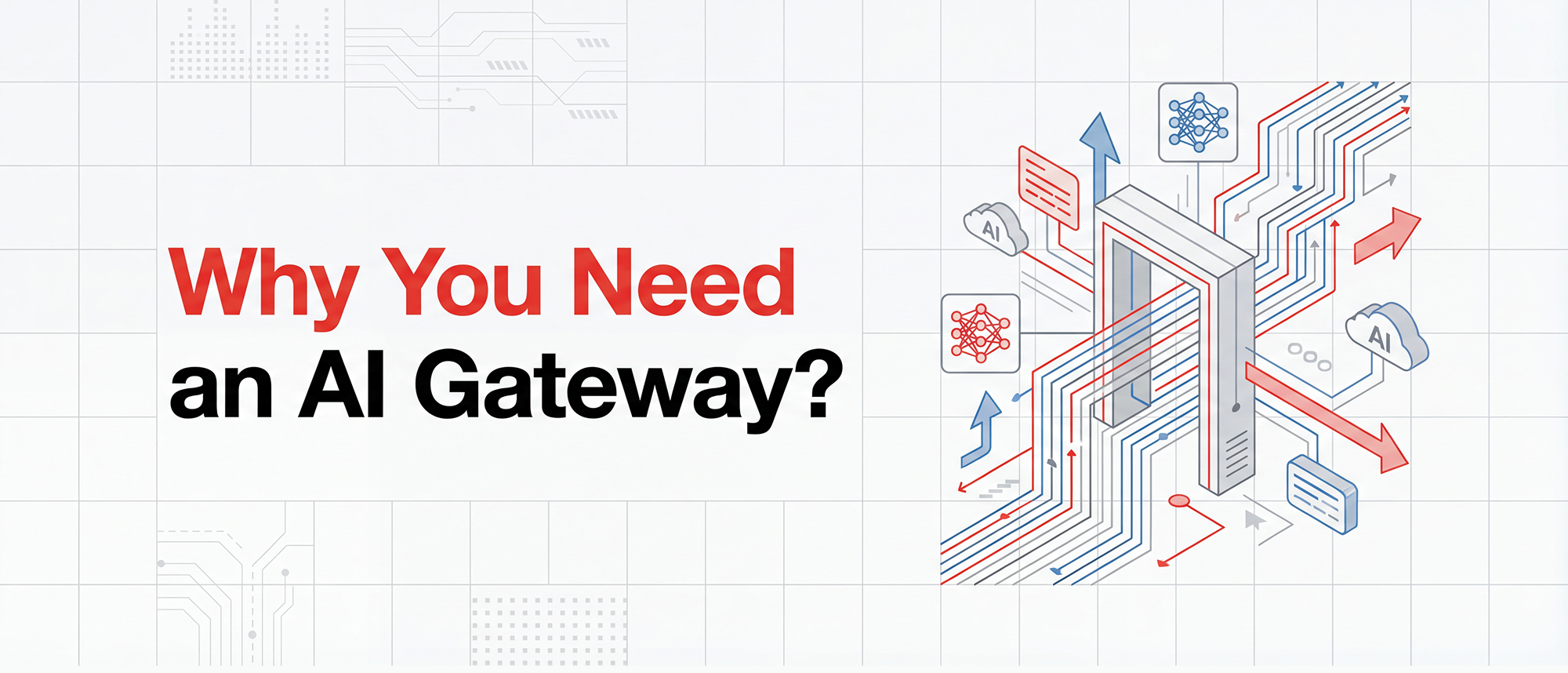
Integrating large language models (LLMs) into modern applications is not as simple as calling an API. An AI Gateway acts as a middleware layer connecting AI applications to backend model endpoints, managing traffic, security, and observability.
Unlike traditional API gateways, AI Gateways are specifically designed to address the complexities of AI workloads. They provide centralized control over multiple models, simplify deployment, and enable monitoring, scaling, and security tailored to LLM-specific operations.
With AI adoption accelerating across enterprises, AI Gateways ensure that LLM-powered applications remain reliable, secure, and cost-effective.
Why Enterprises Need an AI Gateway for LLM Integration
Direct integration of LLM models without a gateway introduces risks: inconsistent performance, high operational costs, and security vulnerabilities. An AI Gateway provides a centralized solution to these challenges:
- Streamlined Multi-LLM Integration: Centralize access to multiple AI models and APIs.
- Optimized Traffic Management: Dynamically route requests to the most suitable models.
- Security & Compliance: Enforce authentication, authorization, and encryption to protect sensitive data.
- Cost Control: Implement quota management, rate limiting, and consumption tracking to reduce waste.
An AI Gateway is essential for businesses that rely on AI at scale, ensuring a smooth, manageable, and reliable deployment of LLMs.
Key Benefits of Using an AI Gateway
1. Multi-Model Diversity and Flexibility
Organizations often need access to multiple LLM models for different tasks. AI Gateways enable seamless multi-model adoption, allowing developers to:
- Select the best model for each task automatically.
- Switch between models without modifying application code.
- Maintain consistency in AI output quality across services.
This flexibility reduces vendor lock-in and ensures that applications can leverage the latest AI innovations without interruption.
2. Cost Optimization for AI Workloads
LLM usage can be resource-intensive, leading to unexpected expenses. AI Gateways provide tools for consumption monitoring, rate-limiting, and quota management, allowing teams to:
- Track token usage per request and per model.
- Prevent overuse that could lead to cost overruns.
- Allocate resources efficiently across multiple AI services.
By controlling AI consumption, businesses can predict and manage costs more effectively while maximizing performance.
3. Observability and Performance Monitoring
AI Gateways deliver comprehensive monitoring of AI requests and responses, including:
- Response times and latency statistics.
- Error rates and failed request logs.
- Usage patterns across multiple models.
With detailed observability, teams can troubleshoot quickly, optimize workflows, and ensure consistent LLM performance in production environments.
4. Robust Security and Compliance
AI integrations introduce new security and privacy risks, including unauthorized access, data leaks, and compliance challenges. AI Gateways address these risks through:
- Authentication and role-based access control.
- End-to-end encryption of data in transit.
- Audit logging for compliance and regulatory reporting.
By implementing these measures, enterprises can confidently integrate LLMs while safeguarding sensitive information.
How an AI Gateway Works
An AI Gateway functions as the intelligent intermediary between applications and AI models. Its core processes include:
- Traffic Routing: Automatically directs requests to the optimal LLM based on workload, latency, or cost.
- Data Preprocessing: Normalizes and cleans input data for consistent model outputs.
- Monitoring & Logging: Tracks all AI operations, providing transparency for optimization and debugging.
- Scaling & Load Balancing: Distributes workloads efficiently across available AI resources to maintain low latency and high reliability.
These features ensure that LLM-powered applications are reliable, secure, and easy to manage, even at enterprise scale.
Best Practices for Integrating LLMs with an AI Gateway
- Centralize All LLM Traffic: Use a single gateway to manage all AI model interactions, reducing complexity.
- Monitor Usage Metrics Continuously: Track token usage, latency, and error rates to identify optimization opportunities.
- Implement Consumption Controls: Set quotas and rate limits to prevent overuse and reduce unexpected costs.
- Ensure Robust Security: Apply authentication, authorization, and encryption policies for all AI endpoints.
- Leverage Multi-Model Orchestration: Dynamically switch between models to optimize performance, cost, and reliability.
Adopting these best practices ensures that AI deployments remain scalable, predictable, and aligned with enterprise requirements.
开桥: The Enterprise AI API Gateway
开桥 is a leading AI API Gateway that centralizes access to large language models, providing enterprises with a reliable and scalable AI infrastructure.
开桥 offers:
- Unified Multi-LLM Access: One API to connect to multiple top-tier models.
- Intelligent Routing & Optimization: Automatically selects the optimal model based on task requirements.
- Real-Time Monitoring: Tracks AI usage, latency, and output quality.
- LLM Insurance: Automatic compensation for poor output quality or excessive latency, ensuring enterprise confidence in AI deployment.
By using 开桥, developers and enterprises can focus on innovation, leaving the complexities of AI integration, cost management, and model reliability to the platform.
Whether managing high-scale production environments or smaller projects, 开桥 delivers consistent, high-quality AI outputs, making it the ideal solution for modern AI-powered applications.
Conclusion
Integrating LLM models into applications requires more than just connecting APIs—it requires an intelligent, secure, and observant layer to manage AI operations effectively. AI Gateways provide the control, monitoring, and optimization needed to maximize AI potential while minimizing risk and cost.
For enterprises looking to scale AI confidently, 开桥 offers a comprehensive, enterprise-grade solution that ensures reliability, performance, and security across all AI workloads.